

Article Sidebar
Downloads
Main Article Content
Abstract
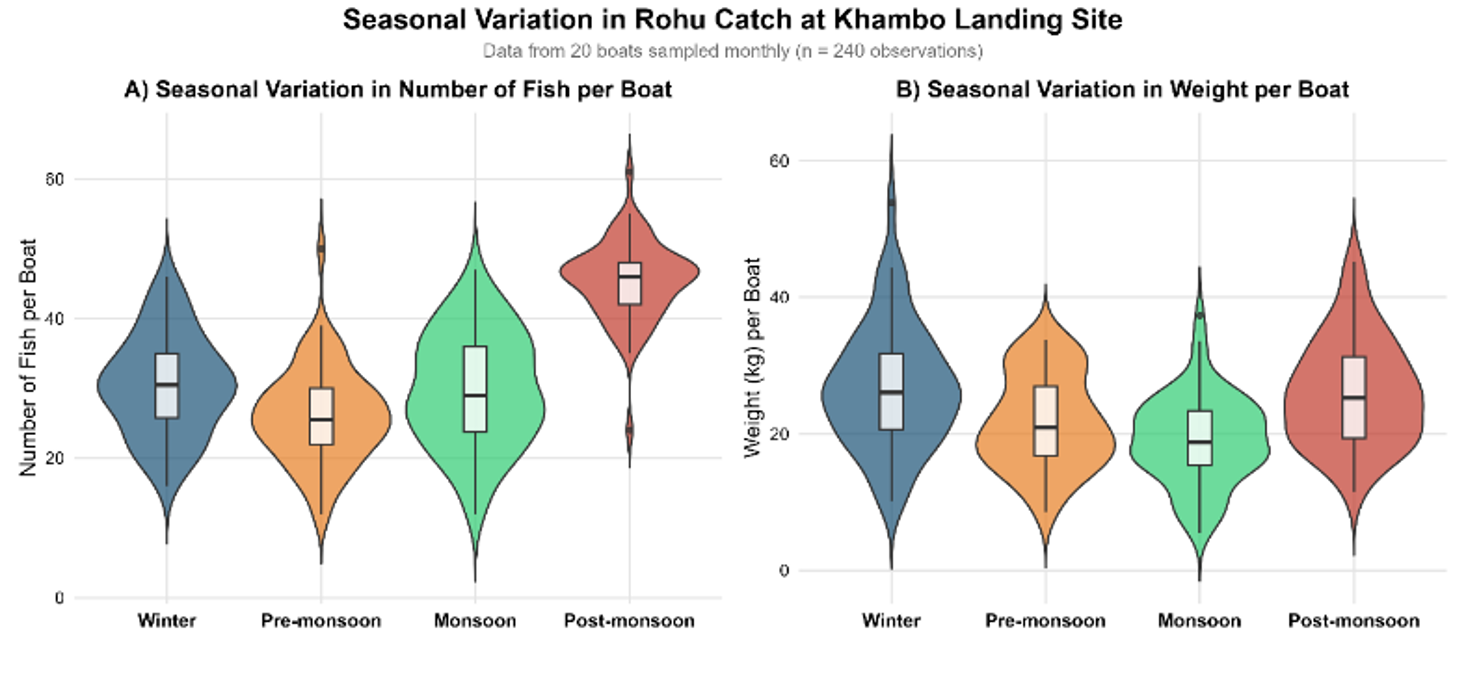
This study presents a comprehensive analysis of monthly catch data for Labeo rohita (Rohu) collected from the Khambo landing site at Keenjhar Lake over a 12-month period (January to December 2025). A total of 20 boats were sampled monthly from an operational fleet of 250 boats, with fishing activity occurring 9-10 days per month. Catch per unit effort (CPUE) was calculated for both number of fish and weight (kg). The results indicate significant seasonal variation in Rohu catch, with peak abundance observed during the post-monsoon period (September-November). The lowest catches were recorded during the pre-monsoon months (March-April). The highest monthly catch (both in number and weight) occurred in November (920 fish, 659kg), while the lowest was recorded in March (489 fish, 380 kg). The mean weight per fish varied throughout the year (0.484-1.136kg), with larger specimens caught during the pre-monsoon period (February-April) and smaller fish dominating the post-monsoon catch (July-October). Statistical analysis revealed significant seasonal differences in both the number (ANOVA, F=6.23, P<0.01) and weight (ANOVA, F=4.87, P<0.05) of fish caught. These findings provide crucial baseline data for sustainable fisheries management and highlight the need for seasonal fishing regulations, particularly mesh-size restrictions during the post-monsoon recruitment period, to ensure the long-term viability of the Rohu fishery in Keenjhar Lake.
Keywords
Article Details

This work is licensed under a Creative Commons Attribution-NonCommercial-NoDerivatives 4.0 International License.
The authors transfer the copyrights of their papers to the Iranian Society of Ichthyology. However, the information could be used in accordance with the Creative Commons licence (Attribution-NonCommercial 4.0 International (CC BY-NC 4.0)
References
- Ahmad, S.; Hassan, S. & Khan, M. 2019. Seasonal closure effectiveness in major carp fisheries of Pakistan. Pakistan Journal of Fisheries 8(3): 45-56.
- Ahmad, S. Khan, M. & Hassan, S. 2020. Stock assessment of Labeo rohita in the Indus River system. Journal of Fish Biology 96(4): 1023-1032.
- Ahmed, F.; Rahman, M. & Hossain, M. (2020). Seasonal variation in catch composition and CPUE of major carps in the Ganges River. Bangladesh Journal of Fisheries 32(2): 155-167.
- Ali, M.; Hassan, S. & Khan, M. 2015. Reproductive biology of Labeo rohita in the Indus River, Pakistan. Asian Journal of Fisheries, 15(2): 78-89.
- Chakraborty, B.; Nandi, A. & Dutta, S. 2006. Spawning season of Indian major carps in West Bengal. Journal of Inland Fisheries Society of India 38(1): 15-23.
- Dayo, F. & Jakhrani, M.A. 2024. Risk assessment and determination of arsenic and heavy metals in fish species collected from fish ponds of Kandhkot Sindh Pakistan: An impactful study. Kashf Journal of Multidisciplinary Research 1(1): 1-15.
- Department of Fisheries, Government of Pakistan. 2020. Pakistan Fisheries Statistics 2019. Islamabad: Government of Pakistan.
- Eagderi, S.; Mouludi-Saleh, A. & Nazlabadi, S.A. 2019. First record of the rohu, Labeo rohita (Hamilton, 1822) (Cyprinidae) from Karun River, Tigris River drainage, Iran. FishTaxa-Journal of Fish Taxonomy 14: 18-20.
- Ecological Assessment for Downstream Indus Impacts & Keenjhar Lake Conservation Action Plan. 2024. Sindh: Government of Sindh/UNDP.
- FAO. 2018. Technical Guidelines for Responsible Fisheries: Fisheries Management. Rome: Food and Agriculture Organization.
- Froese, R.; Zeller, D. & Pauly, D. 2016. Catch per unit effort in fisheries: A review. Fisheries Research 183: 132-145.
- Hassan, S.; Khan, M. & Ahmad, S. 2018. Fish landing sites in Sindh province: A baseline survey. Pakistan Journal of Zoology 50(2): 445-452.
- Hossain, M.; Rahman, M. & Ahmed, F. (2019). CPUE and catch composition of major carps in the Ganges River, Bangladesh. Journal of Applied Ichthyology 35(3): 567-575.
- Jentoft, S.; Chuenpagdee, R. & Pascual-Fernandez, J. 2017. Co-management in fisheries: A review. Marine Policy 82: 141-148.
- Jhingran, A. 1991. Fish and Fisheries of India. New Delhi: Hindustan Publishing Corporation.
- Khan, M.; Hassan, S. & Ahmad, S. 2018. Migration patterns of Labeo rohita in the Indus River system. Journal of Fish Biology 93(5): 889-898.
- Khan, M.; Hassan, S. & Ahmad, S. 2016. Economic importance of major carps in Pakistan. Pakistan Economic Review 45(2): 125-136.
- Kumar, R.; Singh, S. & Sharma, P. 2019. Size at maturity of Labeo rohita in Indian rivers. Journal of Applied Ichthyology 35(4): 789-798.
- Laghari, A.M.; Narejo, N.T.; Chandio, M.H.; Saddar, F.; Laghari, M.Y.; Lal, M.; Imtiaz, U.; Narejo, M.P.; Lashari, H.; Abbas, G. & Rashid, S. 2024. Assessment of fish diversity and weight-length analysis of dominant species in Haleji Lake District Thatta, Sindh, Pakistan. Sarhad Journal of Agriculture 40(1): 112-125.
- Mahmood, M.A. 2024. Population dynamic parameters of Rohu, Labeo rohita (Hamilton, 1822) in the Indus River, Sindh, Pakistan. Pakistan Journal of Zoology 56(2): 1-12.
- R Core Team. 2020. R: A Language and Environment for Statistical Computing. Vienna: R Foundation for Statistical Computing.
- Rahman, M.; Ahmed, F. & Hossain, M. 2012. Nutritional composition of Labeo rohita from the Ganges River. Journal of Fish Biology 80(5): 1456-1468.
- Sarma, D.; Das, P. & Baruah, A. 2020. CPUE of major carps in the Brahmaputra River, Assam. Indian Journal of Fisheries 67(2): 45-53.
- Sparre, P. & Venema, S. (1992). Introduction to Tropical Fish Stock Assessment. Rome: FAO Fisheries Technical Paper.
- Talwar, P. & Jhingran, A. 1991. Inland Fishes of India and Adjacent Countries. New Delhi: Oxford & IBH Publishing.
References
Ahmad, S.; Hassan, S. & Khan, M. 2019. Seasonal closure effectiveness in major carp fisheries of Pakistan. Pakistan Journal of Fisheries 8(3): 45-56.
Ahmad, S. Khan, M. & Hassan, S. 2020. Stock assessment of Labeo rohita in the Indus River system. Journal of Fish Biology 96(4): 1023-1032.
Ahmed, F.; Rahman, M. & Hossain, M. (2020). Seasonal variation in catch composition and CPUE of major carps in the Ganges River. Bangladesh Journal of Fisheries 32(2): 155-167.
Ali, M.; Hassan, S. & Khan, M. 2015. Reproductive biology of Labeo rohita in the Indus River, Pakistan. Asian Journal of Fisheries, 15(2): 78-89.
Chakraborty, B.; Nandi, A. & Dutta, S. 2006. Spawning season of Indian major carps in West Bengal. Journal of Inland Fisheries Society of India 38(1): 15-23.
Dayo, F. & Jakhrani, M.A. 2024. Risk assessment and determination of arsenic and heavy metals in fish species collected from fish ponds of Kandhkot Sindh Pakistan: An impactful study. Kashf Journal of Multidisciplinary Research 1(1): 1-15.
Department of Fisheries, Government of Pakistan. 2020. Pakistan Fisheries Statistics 2019. Islamabad: Government of Pakistan.
Eagderi, S.; Mouludi-Saleh, A. & Nazlabadi, S.A. 2019. First record of the rohu, Labeo rohita (Hamilton, 1822) (Cyprinidae) from Karun River, Tigris River drainage, Iran. FishTaxa-Journal of Fish Taxonomy 14: 18-20.
Ecological Assessment for Downstream Indus Impacts & Keenjhar Lake Conservation Action Plan. 2024. Sindh: Government of Sindh/UNDP.
FAO. 2018. Technical Guidelines for Responsible Fisheries: Fisheries Management. Rome: Food and Agriculture Organization.
Froese, R.; Zeller, D. & Pauly, D. 2016. Catch per unit effort in fisheries: A review. Fisheries Research 183: 132-145.
Hassan, S.; Khan, M. & Ahmad, S. 2018. Fish landing sites in Sindh province: A baseline survey. Pakistan Journal of Zoology 50(2): 445-452.
Hossain, M.; Rahman, M. & Ahmed, F. (2019). CPUE and catch composition of major carps in the Ganges River, Bangladesh. Journal of Applied Ichthyology 35(3): 567-575.
Jentoft, S.; Chuenpagdee, R. & Pascual-Fernandez, J. 2017. Co-management in fisheries: A review. Marine Policy 82: 141-148.
Jhingran, A. 1991. Fish and Fisheries of India. New Delhi: Hindustan Publishing Corporation.
Khan, M.; Hassan, S. & Ahmad, S. 2018. Migration patterns of Labeo rohita in the Indus River system. Journal of Fish Biology 93(5): 889-898.
Khan, M.; Hassan, S. & Ahmad, S. 2016. Economic importance of major carps in Pakistan. Pakistan Economic Review 45(2): 125-136.
Kumar, R.; Singh, S. & Sharma, P. 2019. Size at maturity of Labeo rohita in Indian rivers. Journal of Applied Ichthyology 35(4): 789-798.
Laghari, A.M.; Narejo, N.T.; Chandio, M.H.; Saddar, F.; Laghari, M.Y.; Lal, M.; Imtiaz, U.; Narejo, M.P.; Lashari, H.; Abbas, G. & Rashid, S. 2024. Assessment of fish diversity and weight-length analysis of dominant species in Haleji Lake District Thatta, Sindh, Pakistan. Sarhad Journal of Agriculture 40(1): 112-125.
Mahmood, M.A. 2024. Population dynamic parameters of Rohu, Labeo rohita (Hamilton, 1822) in the Indus River, Sindh, Pakistan. Pakistan Journal of Zoology 56(2): 1-12.
R Core Team. 2020. R: A Language and Environment for Statistical Computing. Vienna: R Foundation for Statistical Computing.
Rahman, M.; Ahmed, F. & Hossain, M. 2012. Nutritional composition of Labeo rohita from the Ganges River. Journal of Fish Biology 80(5): 1456-1468.
Sarma, D.; Das, P. & Baruah, A. 2020. CPUE of major carps in the Brahmaputra River, Assam. Indian Journal of Fisheries 67(2): 45-53.
Sparre, P. & Venema, S. (1992). Introduction to Tropical Fish Stock Assessment. Rome: FAO Fisheries Technical Paper.
Talwar, P. & Jhingran, A. 1991. Inland Fishes of India and Adjacent Countries. New Delhi: Oxford & IBH Publishing.