
Article Sidebar
Downloads
Main Article Content
Abstract
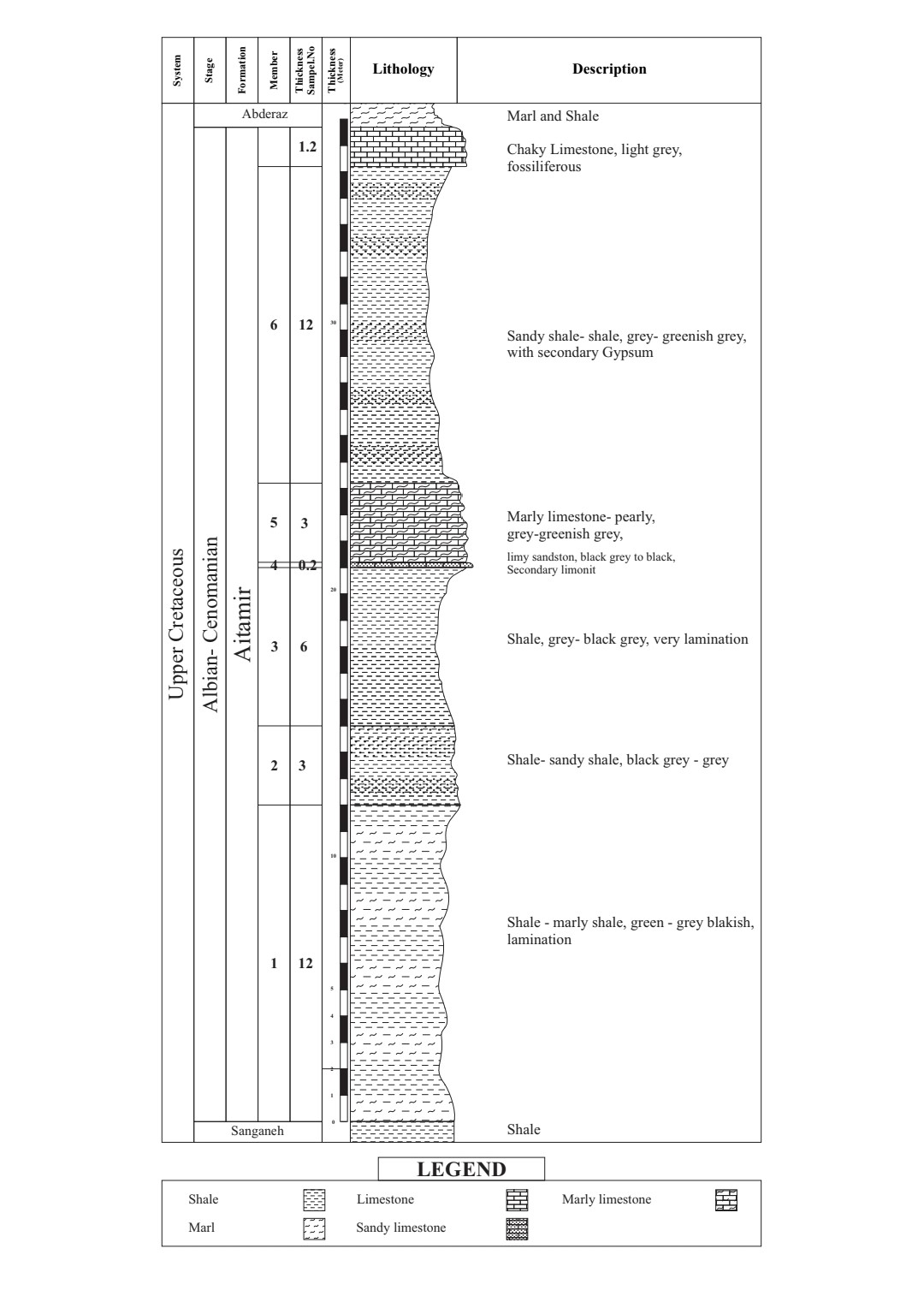
The Aitamir Formation is one of the most important Cretaceous units in the Kopet-Dagh sedimentary basin in northern and northeastern Iran. The dominant lithology of this formation consists of sandstone, olive-green glauconitic shales, and three coquina beds. The Behkadeh Razavi section is situated west of Ashkhaneh. In this study, a total of 44 fossil shark teeth were collected from the shaly deposits of the upper part of the Aitamir Formation near Behkadeh Razavi. After cleaning the samples, microscopic investigations and systematic descriptions were conducted, leading to the identification of four species across four genera: Ptychodus decurrens, Scapanorhynchus raphiodon, Cretodus crassidens, and Cretoxyrhina sp. Comparative analysis of these specimens with similar material from other parts of the world, along with the comparison of their relative ages and the fact that all specimens were discovered within the same stratigraphic horizon in the studied Aitamir Formation, indicates that the age of the fossil-bearing deposits is Cenomanian. The obtained age is in complete agreement with age determinations based on foraminifera. Furthermore, the presence of these fossils and their associated paleoecological implications provide important information for reconstructing the paleoenvironment.
Keywords
Article Details

This work is licensed under a Creative Commons Attribution-NonCommercial-NoDerivatives 4.0 International License.
The authors transfer the copyrights of their papers to the Iranian Society of Ichthyology. However, the information could be used in accordance with the Creative Commons licence (Attribution-NonCommercial 4.0 International (CC BY-NC 4.0)
References
- Afshar-Harb, A. 1994. Geology of the Kopet-Dagh. Geological Survey of Iran, Geology of Iran Series. No. 11, 275 p.
- Afshar-Harb, A. 1994. Geology of the Kopet-Dagh. Geological Survey of Iran, 275 p.
- Agassiz, L. (1835, 1843, 1844). Recherches sur les poissons fossiles. Neuchâtel.
- Aghanabati, A. 2004. Geology of Iran. Geological Survey of Iran, 586 p.
- Amalfitano, J.; Dalla Vecchia, F.M.; Carnevale, G.; Fornaciari, E.; Roghi, G. & Giusberti, L. 2022. Morphology and paleobiology of the Late Cretaceous large-sized shark Cretodus crassidens (Dixon, 1850) (Neoselachii; Lamniformes). Journal of Paleontology 96(5), 1166–1188.
- Bazzi, M.; Campione, N.E.; Kear, B.P.; Pimiento, C. & Ahlberg, P.E. 2021. Tooth morphology elucidates shark evolution across the end-Cretaceous mass extinction. PLOS Biology 19(8): e3001108.
- Berberian, M. 1991. Tectonics and paleogeography of Iran. Geological Survey of Iran Report.
- Cappetta, H. 2012. Chondrichthyes: Teeth. Handbook of Paleoichthyology, Vol. 3 E.
- Case, G.R. 1973. Fossil sharks: A pictorial review. New York, 64 p.
- Compagno, L.J.V. 1988. Sharks of the order Carcharhiniformes. Princeton University Press, 486 p.
- Dixon, F. 1850. The geology and fossils of the Tertiary and Cretaceous formations of Sussex. London, 422 p.
- Eftekharnajad, J. & Behroozi, A. 1991. Investigation of ophiolitic and Late Paleozoic rocks in northeastern Iran. Quarterly Journal of Earth Sciences 1(1): 4-19.
- Gluckman, L.S. 1958. Rates of evolution in lamnoid sharks. Doklady Akademii Nauk SSSR 123: 568-571.
- Hairapetian, V. & Ginter, M. 2009. Famennian chondrichthyan remains from Central Iran. Acta Geologica Polonica 59(2): 173-200.
- Hamm, S.A. 2020. Cretodus crassidens: redescription and paleoecology. Transactions of the Kansas Academy of Science 123: 171-186.
- Hosseinzadeh, R. & Ghaseminejad, E. 2007. Paleoecological and biostratigraphic significance of the shark Ptychodus in the Late Cretaceous with an example from the Ilam Formation. In Proceedings of the 26th Symposium of Geosciences, Geological Survey of Iran, Tehran.
- Jordan, D.S. 1898. Description of a species of fish (Mitsukurina owstoni). Proceedings of the California Academy of Sciences 1(6): 199-204.
- Khosravi, E. & Hyžný, M. 2016. Documentation techniques for fossil leucosioid crabs. In 6th Symposium on Mesozoic and Cenozoic Decapod Crustaceans.
- Khosravi, E. & Mohammadi-Azad, M.T. 2009. Comparative zoology. Tehran: Razmandegan Publications, 250 p.
- Kobrāyī, Z. & Hairapetian, V. 2009. Morphology of fossil shark teeth from Central Iran. In Proceedings of the 29th Symposium of Earth Sciences, Geological Survey of Iran, Tehran.
- Loeblich, A.R. & Tappan, H. 1988, Postuma J.A., 1971, Kalantari A., 1969, Isabella P.S & David Verga., 2014, Caron M., 1978.
- Mousavi Harami, R. & Adabi, M.H. 1986. Geological and geomorphological report of the Kopet-Dagh. Ferdowsi University of Mashhad Press.
- Nabavi, M.H. 1976. An introduction to the geology of Iran. Geological Survey of Iran, 109 p.
- Siverson, M. 1996. Mid-Cretaceous lamniform sharks. Palaeontology 39(4): 813-849.
- Sokolov, M.I. 1965. Evolution of shark teeth. Bulletin de la Société Géologique de France 7: 133-137.
- Stocklin, J. 1968. Structural history and tectonics of Iran. AAPG Bulletin 52(7): 1229-1258.
- Trif, N.; Codrea, V.A. & Bordeianu, S. 2020. First record of fossil shark teeth in NE Iran. Acta Palaeontologica Romaniae 16(1): 3-10.
- Underwood, C.J. & Cumbaa, S.L. 2010. Cenomanian chondrichthyans. Palaeontology 53(4): 903-944.
- Vullo, R. & Courville, P. 2014. Ptychodus revision. Journal of Vertebrate Paleontology 34(3): 547-563.
- Welton, B.J. & Farish, R.F. 1993. The collector’s guide to fossil sharks and rays. Texas, 204 p.
- Woodward, A.S. 1889. Catalogue of fossil fishes. British Museum, 474 p.
- Zangerl, R. 1981. Paleozoic Elasmobranchii. In Handbook of Paleoichthyology (Vol. 3A). Stuttgart.
References
Afshar-Harb, A. 1994. Geology of the Kopet-Dagh. Geological Survey of Iran, Geology of Iran Series. No. 11, 275 p.
Afshar-Harb, A. 1994. Geology of the Kopet-Dagh. Geological Survey of Iran, 275 p.
Agassiz, L. (1835, 1843, 1844). Recherches sur les poissons fossiles. Neuchâtel.
Aghanabati, A. 2004. Geology of Iran. Geological Survey of Iran, 586 p.
Amalfitano, J.; Dalla Vecchia, F.M.; Carnevale, G.; Fornaciari, E.; Roghi, G. & Giusberti, L. 2022. Morphology and paleobiology of the Late Cretaceous large-sized shark Cretodus crassidens (Dixon, 1850) (Neoselachii; Lamniformes). Journal of Paleontology 96(5), 1166–1188.
Bazzi, M.; Campione, N.E.; Kear, B.P.; Pimiento, C. & Ahlberg, P.E. 2021. Tooth morphology elucidates shark evolution across the end-Cretaceous mass extinction. PLOS Biology 19(8): e3001108.
Berberian, M. 1991. Tectonics and paleogeography of Iran. Geological Survey of Iran Report.
Cappetta, H. 2012. Chondrichthyes: Teeth. Handbook of Paleoichthyology, Vol. 3 E.
Case, G.R. 1973. Fossil sharks: A pictorial review. New York, 64 p.
Compagno, L.J.V. 1988. Sharks of the order Carcharhiniformes. Princeton University Press, 486 p.
Dixon, F. 1850. The geology and fossils of the Tertiary and Cretaceous formations of Sussex. London, 422 p.
Eftekharnajad, J. & Behroozi, A. 1991. Investigation of ophiolitic and Late Paleozoic rocks in northeastern Iran. Quarterly Journal of Earth Sciences 1(1): 4-19.
Gluckman, L.S. 1958. Rates of evolution in lamnoid sharks. Doklady Akademii Nauk SSSR 123: 568-571.
Hairapetian, V. & Ginter, M. 2009. Famennian chondrichthyan remains from Central Iran. Acta Geologica Polonica 59(2): 173-200.
Hamm, S.A. 2020. Cretodus crassidens: redescription and paleoecology. Transactions of the Kansas Academy of Science 123: 171-186.
Hosseinzadeh, R. & Ghaseminejad, E. 2007. Paleoecological and biostratigraphic significance of the shark Ptychodus in the Late Cretaceous with an example from the Ilam Formation. In Proceedings of the 26th Symposium of Geosciences, Geological Survey of Iran, Tehran.
Jordan, D.S. 1898. Description of a species of fish (Mitsukurina owstoni). Proceedings of the California Academy of Sciences 1(6): 199-204.
Khosravi, E. & Hyžný, M. 2016. Documentation techniques for fossil leucosioid crabs. In 6th Symposium on Mesozoic and Cenozoic Decapod Crustaceans.
Khosravi, E. & Mohammadi-Azad, M.T. 2009. Comparative zoology. Tehran: Razmandegan Publications, 250 p.
Kobrāyī, Z. & Hairapetian, V. 2009. Morphology of fossil shark teeth from Central Iran. In Proceedings of the 29th Symposium of Earth Sciences, Geological Survey of Iran, Tehran.
Loeblich, A.R. & Tappan, H. 1988, Postuma J.A., 1971, Kalantari A., 1969, Isabella P.S & David Verga., 2014, Caron M., 1978.
Mousavi Harami, R. & Adabi, M.H. 1986. Geological and geomorphological report of the Kopet-Dagh. Ferdowsi University of Mashhad Press.
Nabavi, M.H. 1976. An introduction to the geology of Iran. Geological Survey of Iran, 109 p.
Siverson, M. 1996. Mid-Cretaceous lamniform sharks. Palaeontology 39(4): 813-849.
Sokolov, M.I. 1965. Evolution of shark teeth. Bulletin de la Société Géologique de France 7: 133-137.
Stocklin, J. 1968. Structural history and tectonics of Iran. AAPG Bulletin 52(7): 1229-1258.
Trif, N.; Codrea, V.A. & Bordeianu, S. 2020. First record of fossil shark teeth in NE Iran. Acta Palaeontologica Romaniae 16(1): 3-10.
Underwood, C.J. & Cumbaa, S.L. 2010. Cenomanian chondrichthyans. Palaeontology 53(4): 903-944.
Vullo, R. & Courville, P. 2014. Ptychodus revision. Journal of Vertebrate Paleontology 34(3): 547-563.
Welton, B.J. & Farish, R.F. 1993. The collector’s guide to fossil sharks and rays. Texas, 204 p.
Woodward, A.S. 1889. Catalogue of fossil fishes. British Museum, 474 p.
Zangerl, R. 1981. Paleozoic Elasmobranchii. In Handbook of Paleoichthyology (Vol. 3A). Stuttgart.